Research & Initiatives
ADVANCING SPATIAL INTELLIGENCE AS STRUCTURED KNOWLEDGE
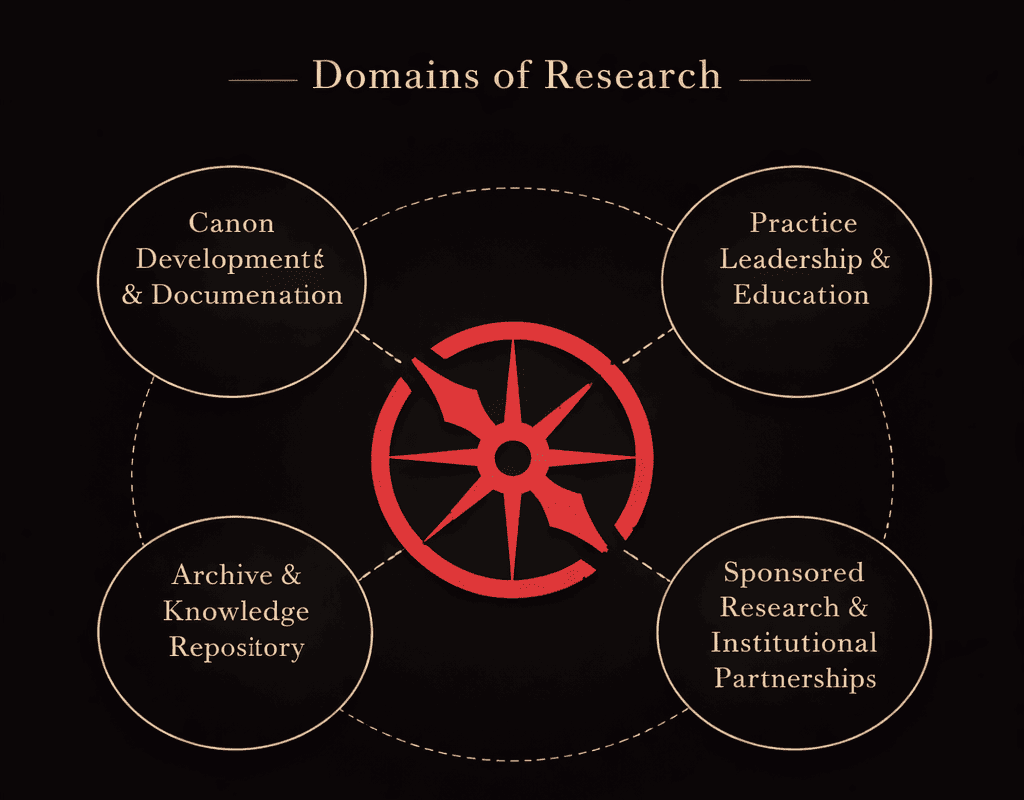
The VāstuSāra Foundation exists to elevate Vāstu from fragmented practice to disciplined inquiry. Its research and initiatives are designed to document, refine, transmit, and institutionalize Spatial Intelligence as a coherent body of knowledge. The Foundation operates across four interrelated domains.
Research & Initiatives
The Foundation's research program transforms traditional knowledge into documented spatial intelligence through systematic inquiry and methodological rigor.
- Documented doctrine development
- Teachable discipline frameworks
- Research-informed practice models
- Consultative institutional frameworks
Canon Development & Documentation
Systematic articulation of the VāstuSāra Canon — stability, flow, activation, responsiveness, and coherence — across residential, commercial, industrial, and institutional environments.
- Case documentation and structured outcome analysis
- Pattern mapping across typologies
- Longitudinal study of environmental corrections
- Terminology refinement for academic clarity
The aim is to move from anecdote to documented pattern.
Built Environment Field Studies
Field research examining the relationships between spatial structure and organizational outcomes.
- Orientation and performance relationships in enterprises
- Spatial hierarchy and leadership dynamics
- Circulation logic and productivity outcomes
- Threshold placement and decision clarity
- Land history and long-term stability
Archive & Knowledge Repository
The Foundation is building a structured archive to support future scholarship and policy dialogue.
- Case records and correction maps
- Architectural drawings
- Field notes and interviews
- Media transcripts
- Historical Vāstu references interpreted through modern reasoning
I. Spatial Intelligence Research Program
The research program focuses on documenting spatial intelligence as a structured discipline. Through case analysis, field studies, and archival work, the Foundation seeks to move the understanding of Vāstu from anecdotal interpretation toward documented environmental patterns.
1. Canon Development & Documentation
Systematic articulation of the VāstuSāra Canon — stability, flow, activation, responsiveness, and coherence — across residential, commercial, industrial, and institutional environments.
- Case documentation and structured outcome analysis
- Pattern mapping across typologies
- Longitudinal study of environmental corrections and performance indicators
- Terminology refinement for academic clarity
2. Built Environment Field Studies
- Orientation and performance relationships in enterprises
- Spatial hierarchy and leadership dynamics
- Circulation logic and productivity outcomes
- Threshold placement and decision clarity
- Land history and long-term stability
3. Archive & Knowledge Repository
- Case records
- Architectural drawings and correction maps
- Field notes
- Interviews
- Media transcripts
- Historical Vāstu references interpreted through modern reasoning
Spatial Intelligence Fellowship
A structured program for young consultants, architects, engineers, planners, and researchers interested in disciplined Vāstu practice.
- Canon study modules
- Case analysis workshops
- Field immersion
- Diagnostic methodology training
- Ethical practice frameworks
Participants are trained to read environments structurally, not symbolically.
II. Practice Leadership & Education
The Foundation cultivates practitioners capable of disciplined spatial analysis. Educational initiatives emphasize methodological clarity, responsible intervention, and ethical professional conduct.
1. Spatial Intelligence Fellowship
- Canon study modules
- Case analysis workshops
- Field immersion
- Diagnostic methodology training
- Ethical practice frameworks
2. Practitioner Development Labs
- Diagnostic discipline
- Intervention proportioning
- Case reasoning
- Documentation standards
- Responsible client communication
3. Academic Collaborations
- Spatial cognition
- Environmental psychology intersections
- Indigenous knowledge systems
- Built heritage coherence
Public Dialogue & Policy Engagement
The Foundation encourages responsible discourse on spatial intelligence through dialogue, publications, and industry engagement.
- Clean Practice Initiative
- Advisory Papers & Position Documents
- Industry Roundtables
III. Public Dialogue & Policy Engagement
1. Clean Practice Initiative
A structured dialogue series addressing:
- Misinterpretations in contemporary Vāstu practice
- Fear-based diagnostics
- Over-prescription without structural reading
- The ethics of spatial advisory
2. Advisory Papers & Position Documents
Publication of structured papers on:
- Responsible spatial correction
- Proportional intervention models
- Documentation frameworks
- Ethical guidelines for practitioners
3. Industry Roundtables
Convening of developers, architects, policy advisors, and consultants to explore:
- Integrating Spatial Intelligence into large-scale planning
- Aligning traditional spatial reasoning with contemporary design
- Institutional calibration strategies
IV. Sponsored Research & Institutional Partnerships
The Foundation actively seeks collaborative projects with:
- Cultural and heritage preservation bodies
- Educational institutions
- Built environment research councils
- Urban development authorities
- Private enterprises exploring environmental performance
Potential project tracks include:
- Spatial coherence audits for public institutions
- Research grants on built environment stability
- Sponsored fellowship programs
- Corporate spatial optimization research
- Heritage site alignment studies
Grant & Funding Pathways
The Foundation's work aligns naturally with funding objectives related to:
- Preservation and reinterpretation of indigenous knowledge systems
- Research in architecture and environmental sciences
- Skill development and practitioner training
- Cultural heritage documentation
- Ethical industry reform initiatives
Detailed proposals and collaboration frameworks are available upon request.
Institutional Direction
The long-term aim of the VāstuSāra Foundation is to establish Spatial Intelligence as:
- A documented doctrine
- A teachable discipline
- A research-informed practice
- A consultative framework for public and private institutions
The Foundation advances this objective through research, education, dialogue, and structured partnerships.
Engage with the Foundation
Propose a Research Collaboration
Apply for Fellowship
Support Ongoing Research
Invite Institutional Dialogue